
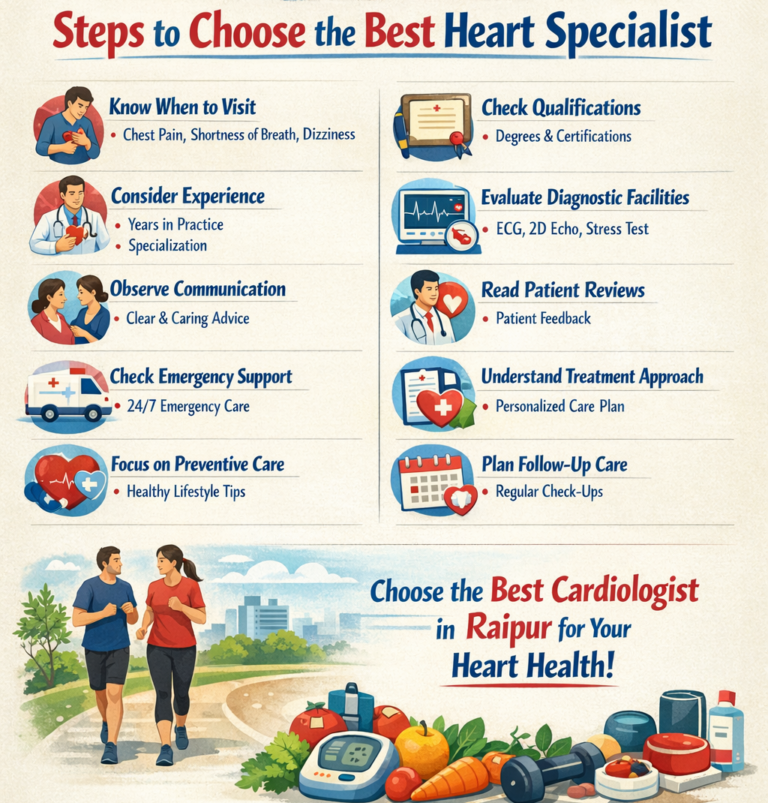
Heart health is very important for a long and healthy life. Many people ignore early symptoms of heart problems because they feel mild at first. However, small warning signs can become serious if not treated on time. Choosing the right heart doctor is an important decision that can affect your diagnosis, treatment, and recovery. If you are searching for the Best Cardiologist In Raipur, it is important to understand what qualities define a skilled heart specialist and how to choose one carefully. This guide explains everything in simple and clear language to help you make the right decision.
Why Choosing the Right Heart Specialist Matters
Heart diseases are increasing worldwide. Conditions such as high blood pressure, blocked arteries, irregular heartbeat, and heart failure need proper medical attention. A trained heart specialist focuses on diagnosing and treating diseases related to the heart and blood vessels.
The right specialist can:
- Detect heart problems early
- Recommend correct diagnostic tests
- Provide safe and effective treatment
- Monitor your condition regularly
- Guide you on lifestyle improvements
Proper care reduces complications and improves long-term health.
Step 1: Know When You Should Visit a Heart Specialist
Many people wait until symptoms become severe. Early consultation can prevent emergencies. You should consider visiting a heart doctor if you notice:
- Chest pain or tightness
- Shortness of breath
- Fast or irregular heartbeat
- Swelling in feet or legs
- Frequent dizziness
- High blood pressure that is not controlled
- Strong family history of heart disease
Early medical advice helps manage problems before they become dangerous.
Step 2: Check Educational Background and Certification
A qualified heart specialist must complete advanced medical training in cardiology. Before choosing a doctor, check:
- Recognized medical degree
- Specialization in heart diseases
- Board certification
- Ongoing medical education
Continuous learning is important because medical science keeps improving.
Step 3: Consider Clinical Experience
Experience plays a major role in heart care. A doctor who has treated many patients understands different conditions better. Experienced specialists are often more confident in handling emergencies and complex cases.
You may look at:
- Years of practice
- Types of heart conditions treated
- Experience with emergency situations
Experience improves judgment and treatment planning.
Step 4: Evaluate Diagnostic Facilities
Accurate diagnosis depends on proper testing. A reliable heart doctor should have access to essential diagnostic tools.
Common heart tests include:
- ECG to measure electrical activity of the heart
- 2D Echo to check heart structure and function
- Stress test to evaluate heart performance during exercise
- Holter monitoring to record heart rhythm over 24 hours
- Blood tests to check cholesterol and sugar levels
Availability of these tests allows faster and more accurate diagnosis.
Step 5: Observe Communication Style
Clear communication builds trust. A good heart specialist should:
- Listen patiently
- Explain reports in simple language
- Discuss treatment options clearly
- Answer your questions honestly
- Provide practical advice
You should feel comfortable discussing your health concerns openly.
Step 6: Read Patient Feedback
Patient reviews can help you understand the doctor’s reputation. Look for feedback about:
- Professional behavior
- Accurate diagnosis
- Supportive staff
- Clear explanations
- Good follow-up care
While reviews should not be the only factor, consistent positive feedback shows reliability.
Step 7: Check Emergency Support Availability
Heart problems can sometimes become urgent. It is important to choose a specialist who can manage emergency situations or is connected to a hospital with proper facilities.
Emergency support should include:
- Quick evaluation
- Access to intensive care if needed
- Immediate testing
- Fast treatment decisions
Preparedness during emergencies can save lives.
Step 8: Understand the Treatment Approach
Each patient is different. A skilled heart doctor creates a treatment plan based on:
- Age
- Medical history
- Current symptoms
- Risk factors
- Test results
Treatment may include medicines, lifestyle advice, monitoring, or procedures if required. Avoid doctors who suggest aggressive treatment without proper explanation.
Step 9: Focus on Preventive Care
Prevention is better than cure. A responsible heart specialist will guide you on reducing risk factors. Preventive care advice may include:
- Healthy diet with less salt and oil
- Regular physical activity
- Weight control
- Blood pressure monitoring
- Cholesterol management
- Stress reduction
Preventive care lowers the risk of heart attack and stroke.
Step 10: Consider Follow-Up and Long-Term Care
Heart disease often needs continuous monitoring. Choose a doctor who provides regular follow-up appointments and keeps proper records. Good follow-up ensures stable recovery and timely adjustment of medicines.
Long-term care improves overall heart function and reduces complications.
Early Warning Signs of Heart Disease
Recognizing early symptoms can protect your life. Common warning signs include:
- Persistent chest discomfort
- Breathlessness during normal activity
- Pain spreading to arm, neck, or jaw
- Sudden sweating
- Unusual tiredness
If you experience these symptoms, medical consultation should not be delayed.
Questions to Ask During Your First Visit
Preparing questions before your appointment can help you understand your condition better. You may ask:
- What is causing my symptoms?
- What tests are required?
- What lifestyle changes should I follow?
- How long will treatment continue?
- How often should I return for follow-up?
Clear answers help you feel confident in your treatment plan.
Importance of Lifestyle Changes
Medicines alone cannot fully protect your heart. Healthy lifestyle habits are equally important.
Good habits include:
- Eating fresh fruits and vegetables
- Reducing salt intake
- Avoiding tobacco products
- Limiting alcohol consumption
- Exercising daily
- Managing stress through relaxation techniques
Small daily improvements can greatly reduce heart risks.
Understanding Risk Factors
Certain factors increase the chances of heart disease. These include:
- Diabetes
- High blood pressure
- High cholesterol
- Obesity
- Smoking
- Family history
Managing these risk factors with proper medical supervision lowers future problems.
Role of Modern Technology in Cardiac Care
Medical technology has improved heart treatment significantly. Digital monitoring systems, advanced imaging, and minimally invasive procedures allow earlier detection and safer treatment. Choosing a specialist who uses updated technology ensures modern and effective care.
Emotional Support and Heart Health
Heart disease can cause fear and anxiety. Emotional support is important during treatment. A supportive doctor will encourage positive thinking and reduce stress by providing clear information. Stress management techniques such as deep breathing and meditation can also improve heart health.
Making a Careful Final Decision
Selecting the right heart specialist requires time and research. Compare qualifications, experience, communication skills, and patient feedback. Do not rush the decision. Your heart is vital, and choosing wisely protects your long-term health.
If you are looking for trusted cardiac care and searching for the Best Cardiologist In Raipur, use these steps to make an informed and responsible decision based on knowledge and understanding.
Final Thoughts
Your heart works every second to keep you alive. Protecting it should be your priority. Early diagnosis, informed choices, healthy lifestyle habits, and regular medical checkups together create strong protection against heart disease. Making the right decision today can lead to a healthier and safer tomorrow.
FAQ
- When should I see a heart specialist?
You should see a heart specialist if you have chest pain, shortness of breath, high blood pressure, or a family history of heart disease. - What tests are commonly done for heart problems?
Common tests include ECG, 2D Echo, stress test, Holter monitoring, and blood tests for cholesterol. - Can heart disease be prevented?
Yes, heart disease risk can be reduced with healthy eating, regular exercise, avoiding smoking, and controlling blood pressure and sugar levels. - How do I know if a heart doctor is qualified?
Check their medical degree, specialization in cardiology, years of experience, and patient reviews. - Are lifestyle changes important in heart treatment?
Yes, lifestyle changes like healthy diet, exercise, and stress control are very important for managing heart conditions.